Solly’s Orchard and Abbots Mill
Project Overview
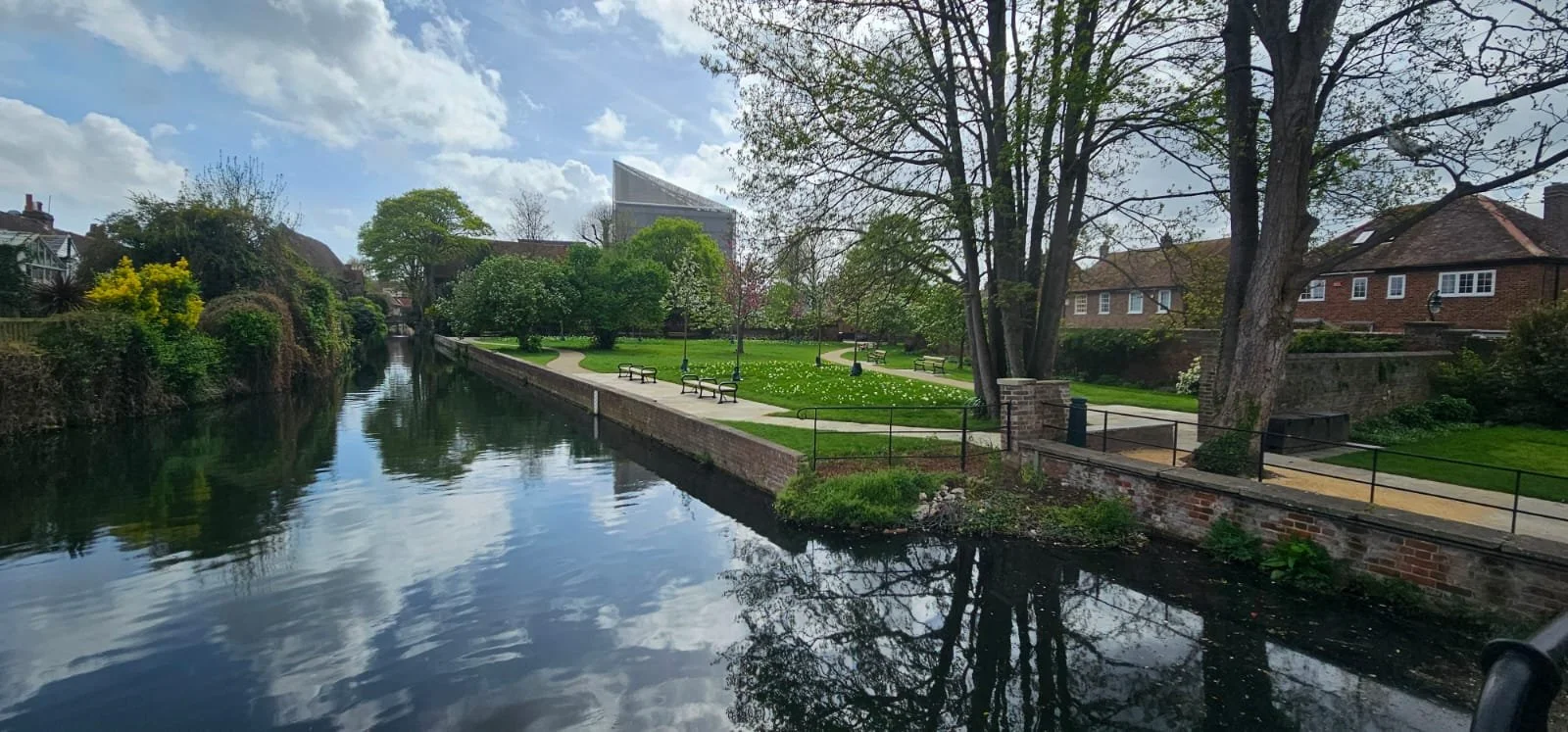
PVR transformed Solly’s Orchard and Abbots Mill into a more accessible, attractive and biodiverse public space as part of Canterbury City Council’s Connected Canterbury: Unlocking the Tales of England programme.
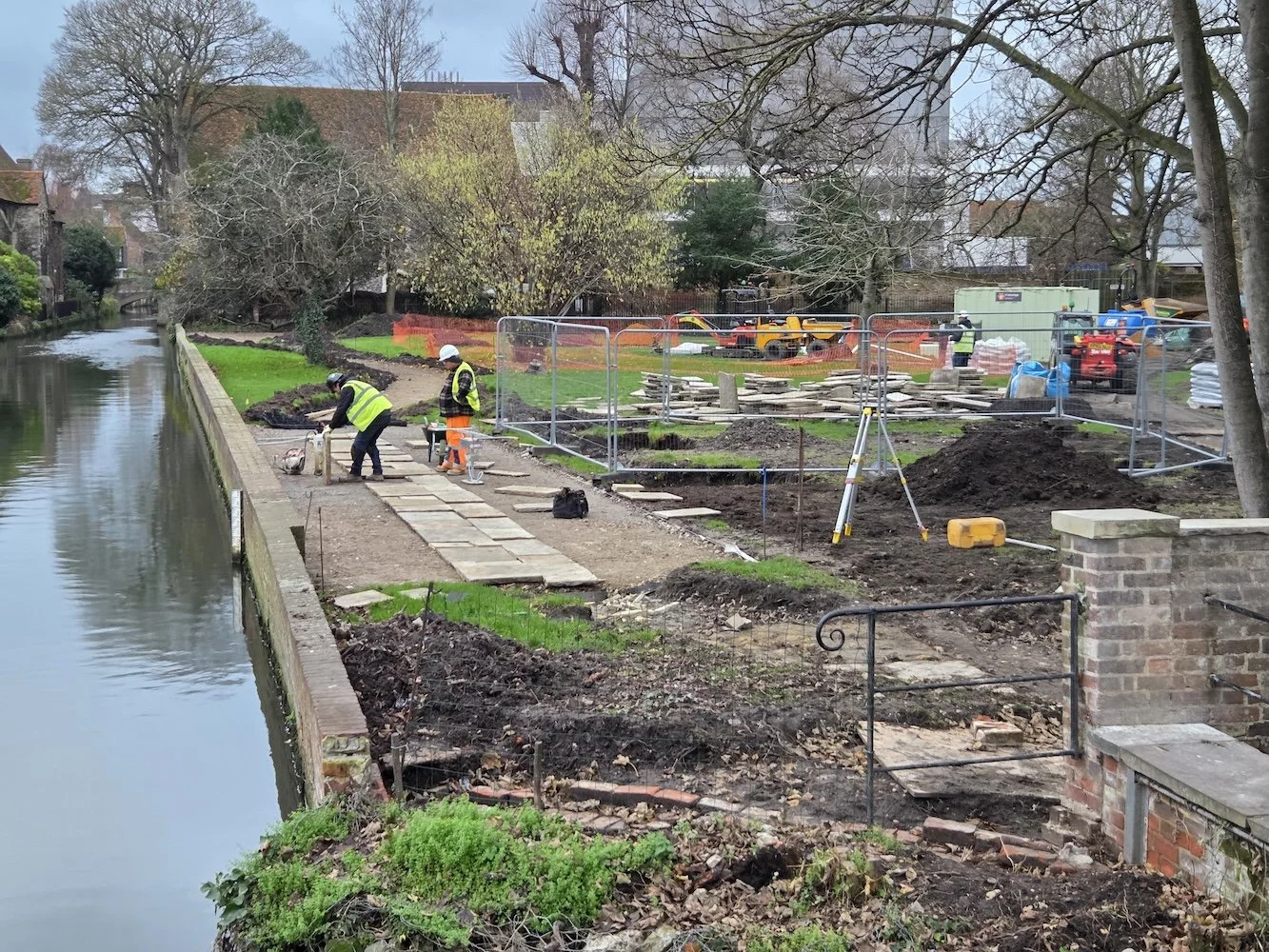
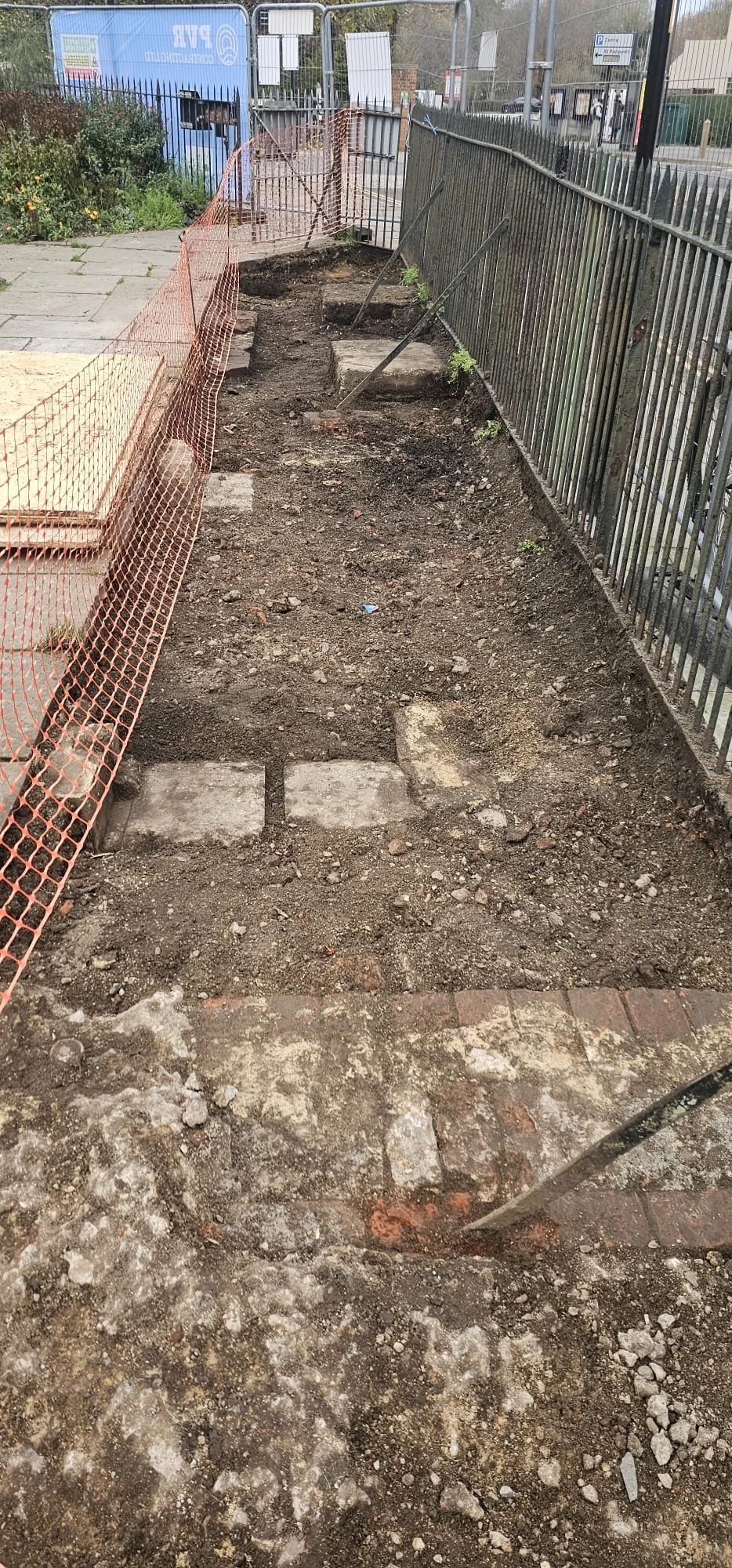
Set within grounds associated with the 13th-century Blackfriars Monastery, the site includes a Scheduled Ancient Monument, an Area of Archaeological Importance, the remains of Abbots Mill and associated Grade II Listed structures. Narrow pathways, stepped access and limited connections to the River Stour had restricted movement and left much of the landscape’s heritage hidden from visitors.
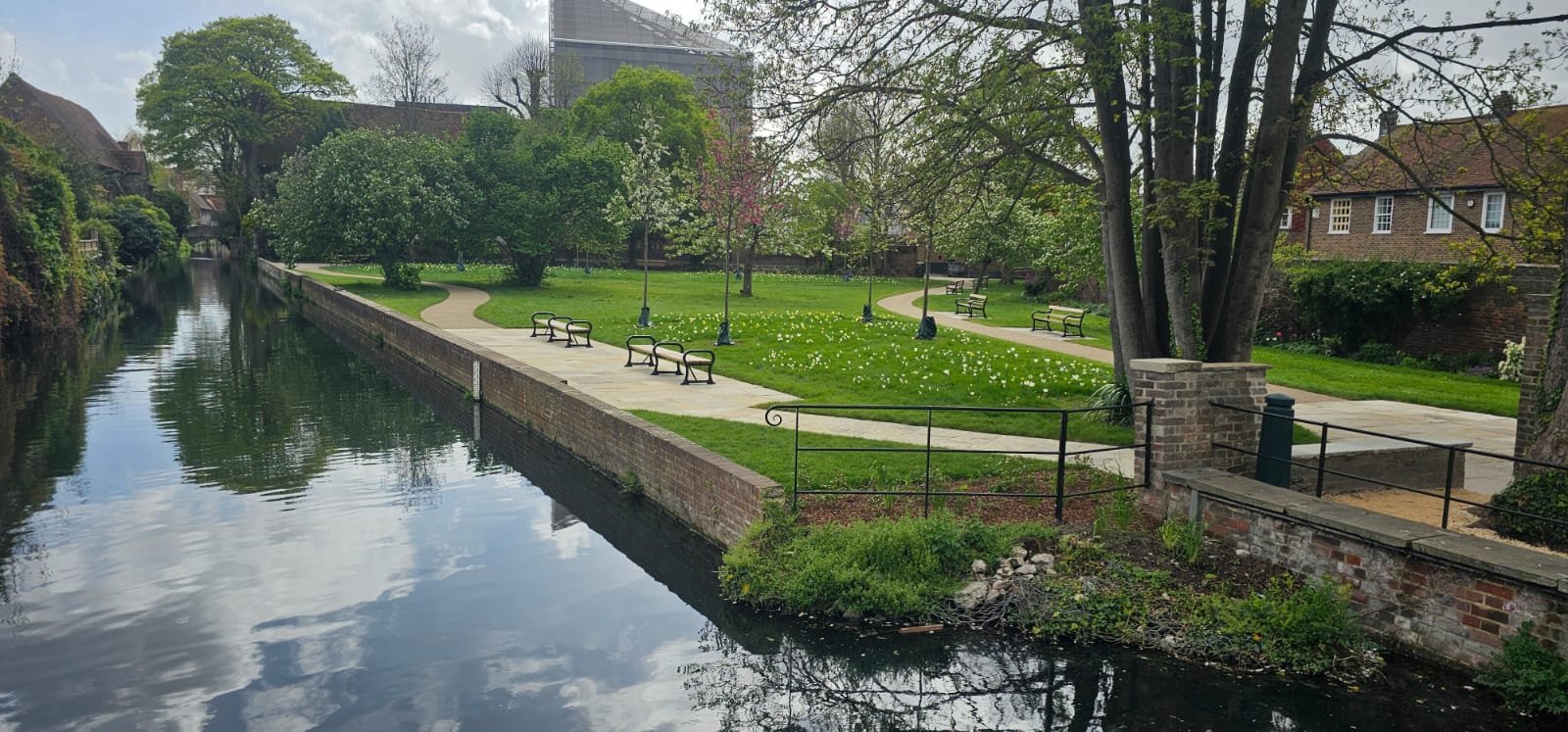
The scheme sensitively refurbished the gardens, restoring their historic character while improving circulation, riverside views and opportunities to explore Canterbury’s heritage.
Scope of Works
Reinstatement of the historic orchard through 13 new tree pits and orchard planting.
Creation of over 760m² of planting areas and approximately 507m² of new lawn, with bulb, perennial and riverside planting.
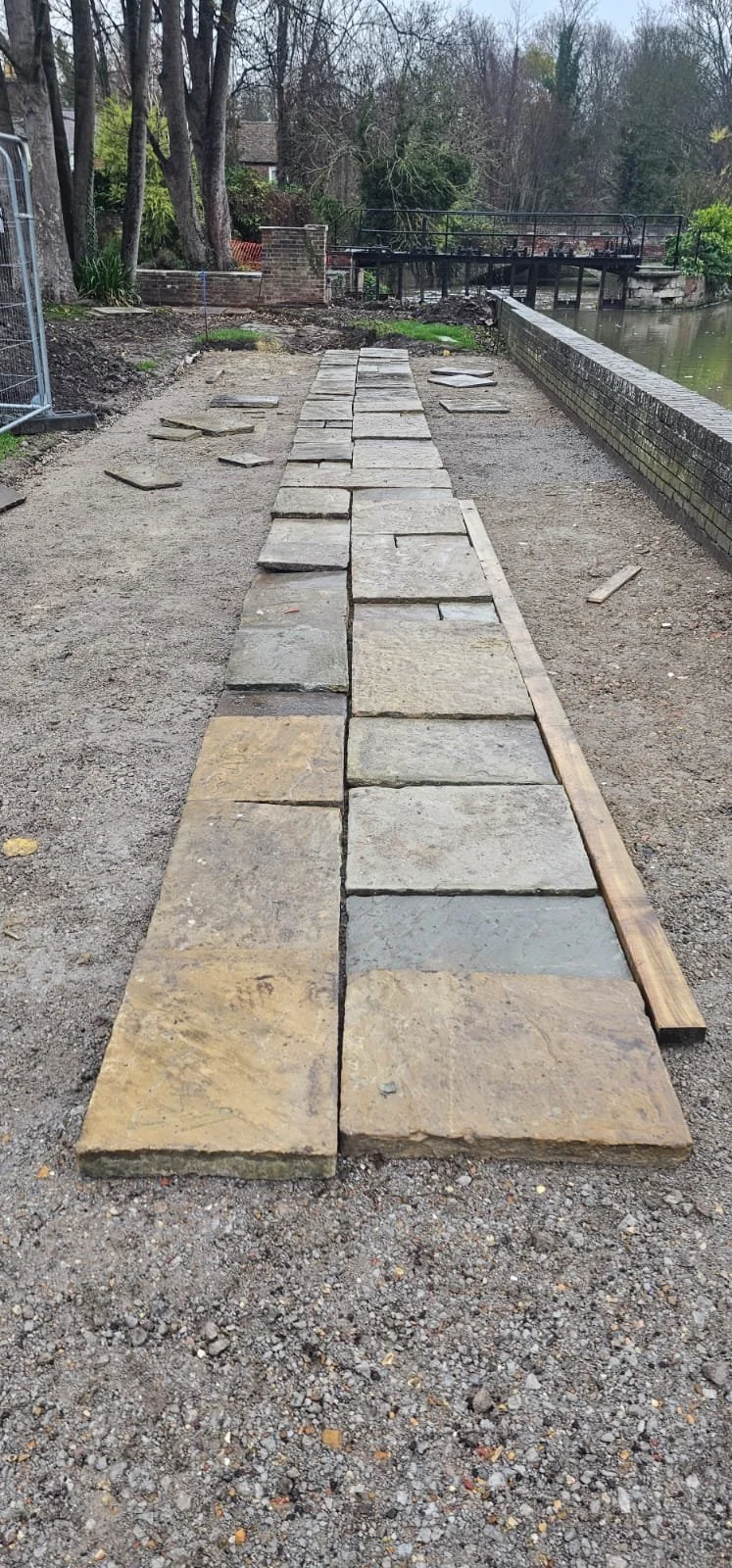
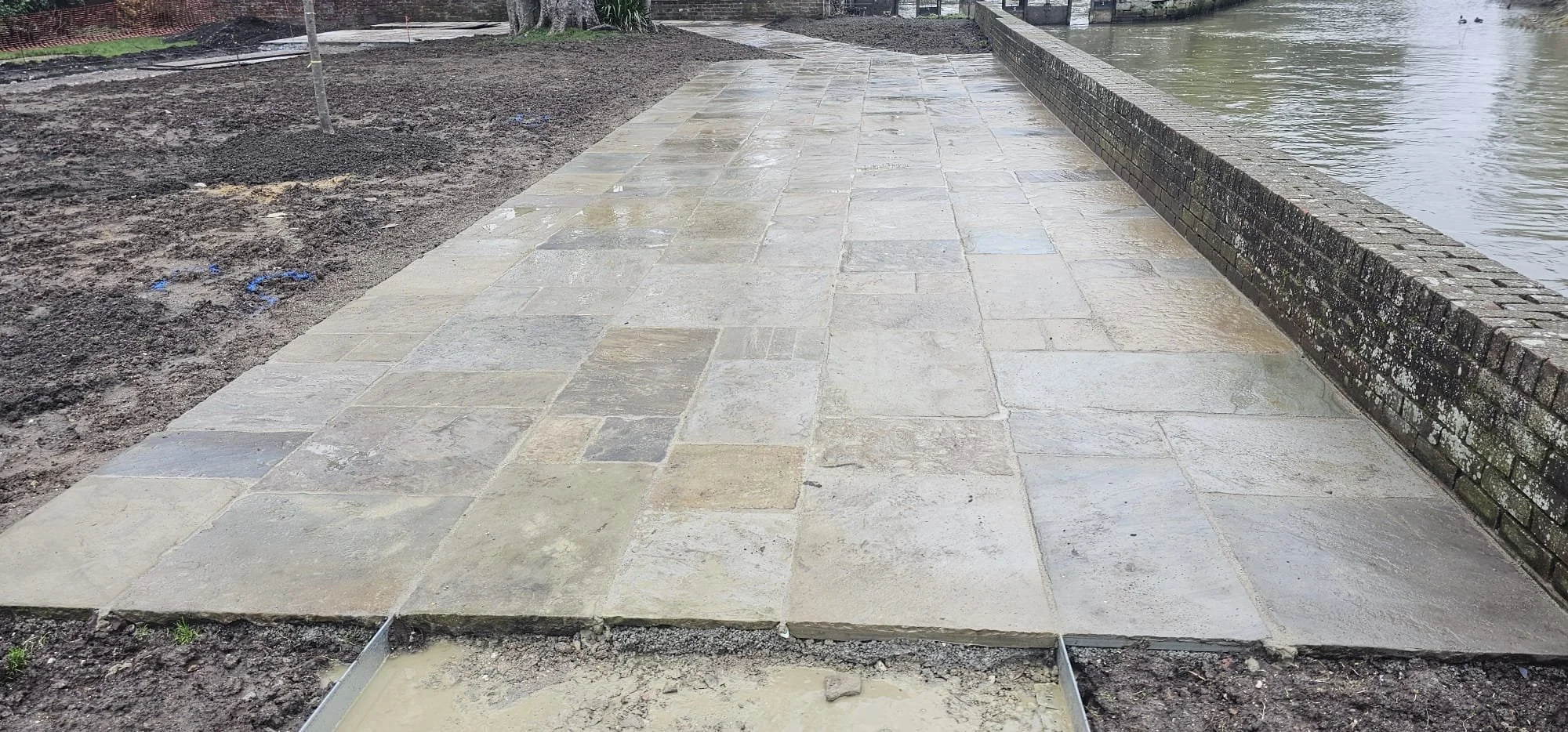
Construction of approximately 300m² of reclaimed Yorkstone paving, 221m² of resin-bound gravel pathways and 20m² of self-binding gravel surfacing.
Installation of over 314 linear metres of metal edging.
Realignment and resurfacing of existing routes to improve accessibility and circulation.
New steps and handrails to existing footbridges, alongside the reduction and rebuilding of sections of historic walling.
Installation of 11 bespoke benches, together with litter bins, viewing terraces and interpretation spaces.
Refurbishment of existing railings, handrails and guardrails.
-
Canterbury City Council
-
Landscape and Civil Engineering Contractor
-
Sensitive Sites, Civil Engineering, Heritage and Public Realm
-
£395,000
-
22 weeks
-
Over 760m² of new planting, approximately 507m² of lawn and 541m² of new hard surfacing
-
Canterbury, Kent
Highlights & Key Benefits
Award-winning regeneration: Winner of the BALI National Landscape Award 2026 — Regeneration Scheme, Under £500K category.
Improved accessibility: Refurbished pathways and realigned routes made the gardens easier to navigate and strengthened connections with the riverside.
Heritage protection: Sensitive construction methods safeguarded archaeological remains while restoring elements of the site’s historic landscape.
Enhanced biodiversity: Orchard trees and varied planting introduced additional habitat, seasonal interest and a richer landscape.
A better visitor experience: Bespoke seating, viewing terraces and interpretation spaces created opportunities to pause, enjoy the River Stour and discover the site’s history.
Project Delivery Challenges & Solutions
Working within a protected historic landscape
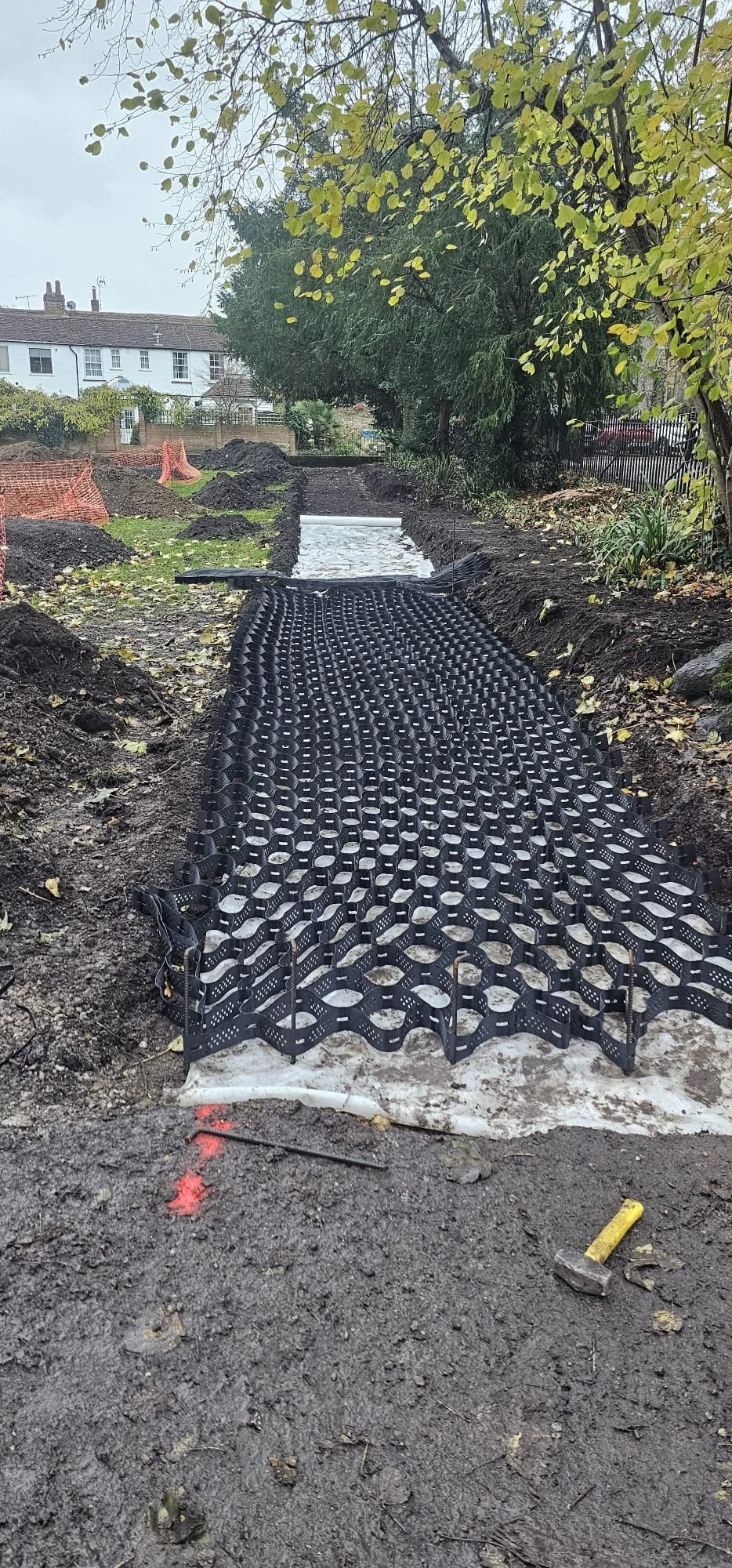
All excavation took place under a continuous archaeological watching brief. Discoveries required close coordination between PVR, the client, archaeologists and landscape architects to adapt construction methods while protecting heritage assets. Where required by Scheduled Monument Consent, work was undertaken manually to minimise disturbance.Restricted city-centre access
Deliveries were routed through nearby car parks and transferred into the site using small plant and specialist equipment. During the first six weeks, PVR coordinated with a separate highway contractor to manage shared access, deliveries and public interfaces safely.Prolonged wet weather
Persistent rainfall created difficult ground conditions and complicated material handling. Flexible sequencing, proactive planning and regular coordination helped maintain progress, protect archaeological features and preserve completed works.
Community Engagement
The scheme placed the needs of residents and visitors at the centre of the improvements. More accessible routes, additional seating and enhanced riverside views created a welcoming space for everyday use, while interpretation areas helped visitors connect with the site’s heritage.
Careful management of deliveries and public interfaces supported delivery within the busy city centre. The completed landscape provides a lasting community benefit, preserving an important historic setting and making it easier for future generations to explore and enjoy.